


Views: 0 Author: Site Editor Publish Time: 2026-08-28 Origin: Site


Picture a shrimp's trip from a fishing boat to your dinner plate. That path includes sorting, peeling, deveining, cooking, and freezing—each step needs care and speed. Doing this by hand alone cannot keep up with today's demand.
A shrimp processing line fixes this problem. It is a connected, automated system that moves raw shrimp through every step, from arrival to packaged product. You hook up the machines, set the controls, and the line does the rest.
This article looks at the main steps of shrimp processing, the machines that power each one, and how automation cuts costs while boosting quality. You will also find new trends shaping the future of seafood production.
Table of Contents
A shrimp processing line is an automated system that manages each step from raw arrival to packaging, improving speed and uniformity.
Automation cuts labor costs a lot, reducing a team from 20-30 workers to just 2-3 operators.
Automated peeling and deveining machines handle 4,000-5,000 shrimp each hour, doing the work of 6-8 people by hand.
Fast freezing ways like IQF keep shrimp's feel and flavor by stopping big ice crystals from forming.
Vacuum packaging keeps seafood fresh and makes it last 3-5 times longer than regular ways.
Modern lines can handle different shrimp types and sizes, giving flexibility for many products.
AI and machine vision now sort items with 99.9% accuracy, cutting waste and mistakes.
Sustainable technologies in processing lines can cut electricity use by up to 70% and water use by 40%, which lowers harm to the environment.

A shrimp processing line is not just one machine. It is a full set of shrimp processing equipment that works together in a smooth flow. You connect each unit so raw shrimp move from one step to the next without stopping. The line handles everything from when shrimp arrive at your facility until they leave as finished, packaged products.
Think of it as a factory inside your factory. You have automatic deheading machines that cut off heads with precision. You have peeling machines that remove shells while keeping the meat whole. You have deveining units that use mechanical or water-jet methods to clean the digestive tract. Sorting and grading systems use sensors to sort shrimp by size, weight, and quality. Freezing solutions like spiral or IQF freezers keep shrimp fresh. Packaging equipment seals everything for shipping.
Each machine has a specific job. Together, they create one smooth production flow. You do not move shrimp between separate workstations. The line carries them automatically. This design cuts down on handling, speeds up processing, and keeps your operation running smoothly.
The heart of a modern line is synchronization. Every stage must run at the same speed. If one machine runs faster than another, you create bottlenecks. Shrimp pile up, workers scramble, and delays cost you money. A well-designed line prevents this problem.
Synchronized conveyors keep speeds matched between stages. You set the pace once, and every machine matches it. This alignment prevents problems that cause delays. For example, condensation can form when shrimp move between temperature zones. Proper synchronization avoids these interruptions.
Centralized PLC control links all modules together. The system logs information like belt speed automatically. You do not need manual checks at every station. This automation cuts down the time workers spend watching equipment. Instead, they focus on quality checks and supervision.
Unified system design matters too. When parts are built to fit together, you avoid downtime from mismatched equipment. You do not struggle with connections that do not fit or different control systems. Everything works as one integrated unit.
Modern lines run continuously. You cut down on downtime between batches. Changeovers happen quickly because the system adjusts automatically. This continuous operation gets the most out of your line. You process more shrimp in less time than manual methods ever allow.
The benefits of automation go beyond speed. You save money on labor. A synchronized line needs only a small team. One feeder and one supervisor can run the entire operation. You do not need dozens of workers standing at manual stations. This reduction lowers your payroll costs a lot.
You also lower contamination risks. Manual handling is a major cause of food-safety problems. Every time a worker touches shrimp, you add risk. Automated lines use stainless-steel surfaces that can be washed down. Sealed cutting zones keep contaminants out. Conveyors move product without direct human contact. This design improves hygiene and reduces safety incidents.
Yield improves as well. Real-world installations show measurable gains. One processor using an automated grading system cut product giveaway by 12%. That means they no longer added extra shrimp beyond the specified weight. This improvement directly boosts profit.
Your shrimp processing methods become more consistent. Machines do not get tired or distracted. They produce the same result every time. Weight and shape differences stay small. This consistency matters for retail customers who want uniform products.
A fish and shrimp processing line offers the same benefits. The technology works across species. You can adapt the system for different products without major changes. This flexibility makes automation a smart investment for any seafood processor.
Modern shrimp processing equipment gives you efficiency you cannot get manually. You cut labor costs, improve food safety, and increase yield. These benefits add up over time. Your operation becomes more competitive in a demanding market.
The shift to automation is a big change in seafood processing. You move from labor-intensive methods to precise, controlled systems. This change improves every part of your production. Quality rises, costs fall, and your team works smarter, not harder.
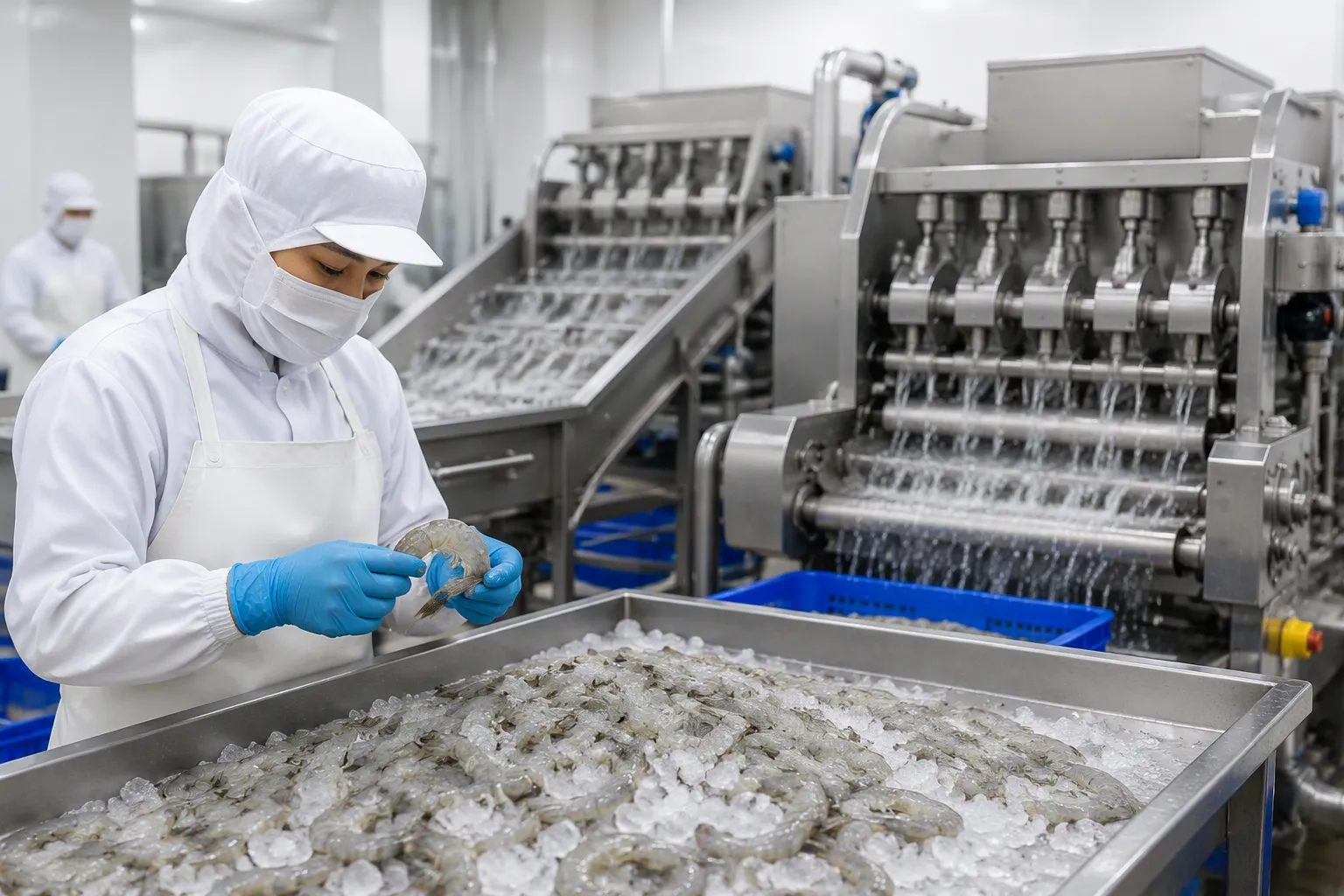
Every shrimp processing line follows a clear order. Each step builds on the last one. If you skip a step or rush it, the final product suffers. Knowing this flow helps you understand why automation matters at every point.
Your line starts when fresh shrimp arrive at your facility. Workers receive the catch in iced conditions, keeping the temperature at or below 4°C. They check the smell, color, shell condition, and overall quality. These checks decide which processing route the shrimp will take. Premium shrimp might go to whole-peeled products. Smaller or damaged shrimp might head to cooked or value-added items.
After inspection, washing begins. You use chlorinated chilled water with 1–5 ppm chlorine to remove sand, mud, and broken shell pieces. This first wash also lowers the surface bacteria count. The cleaning process repeats several times throughout the line. You wash again after de-heading to remove blood and shell fragments. You wash once more after peeling and deveining. Each wash keeps the product clean and improves its appearance.
The order of these cleaning steps matters. Proper washing stops contaminants from spreading to later stages. It also keeps the shrimp cold, which preserves freshness. A well-designed intake area moves shrimp quickly from receiving to the first wash. This speed reduces the time shrimp spend at warmer temperatures.
This stage is the heart of your shrimp processing line. Peeling removes the shell, and deveining takes out the intestinal tract. Manual workers do this job slowly and unevenly. They also add contamination risks through constant handling.
Modern equipment fixes these problems. The Shanlin Shrimp Peeling and Deveining Machine is a great example of this automation. It opens the back of the shrimp and removes the vein using precision stainless steel blades and a water jet system. The machine processes 4,000–5,000 pieces per hour. That output replaces 6–8 manual workers on its own. When you add the full line, the labor savings multiply. A complete automated system reduces your workforce from 20–30 operators to just 2–3 people.
The machine handles a wide range of sizes, from 10/15 to 71/90 counts per pound. It works equally well with warm-water species like farmed Penaeus vannamei and wild Gulf shrimp. It also processes cold-water species such as Arctic shrimp and Northern prawn. This versatility means you do not need separate lines for different products.
The cutting action stays precise and consistent. Weight and shape deviations stay under 3%, which meets strict retail specifications. The machine uses food-grade stainless steel and POM mesh belts, so it meets food safety standards without extra effort.
After peeling and deveining, shrimp move to the next stages. Some products require cooking. Industrial cookers and fryers apply precise temperature control. This step improves texture and taste while eliminating harmful microorganisms. Cooking also gives shrimp that familiar pink color consumers expect.
Freezing comes next, and this stage determines final quality. The method you choose matters greatly. In IQF processing, shrimp pass through the critical freezing zone in under two hours. This rapid freezing minimizes ice crystal formation. Small ice crystals preserve the cell structure, so shrimp keep their original texture and taste after thawing. Slower freezing methods allow larger crystals to form. Those crystals puncture cell walls and degrade the meat. The sequence position of freezing—after cleaning, sorting, and cooking—combined with rapid technique, locks in all the quality improvements from earlier stages.
Your freezing equipment must reach -35°C to -40°C for 8–12 minutes in an IQF tunnel. Plate freezers work at -35°C for 2–3 hours. Either way, the core temperature must reach -18°C or below. After freezing, a thin ice glaze of 5–10% prevents freezer burn during storage.
Value-added processing expands your product range. You can add breading lines for coated shrimp. You can use skewering machines for kebabs. You can create nobashi shrimp by stretching and shaping them. These products command higher prices in the market.
Packaging completes the line. Vacuum packaging machines extend shelf life by removing oxygen. Metal detectors scan every package for safety. Labeling systems add product name, size, batch number, and export details. Finally, cold storage at -18°C or below keeps everything fresh until shipment.
These shrimp processing methods work together as one system. Each stage protects the quality you built in the previous step. When you automate the entire line, you control every variable. Your seafood products come out consistent, safe, and ready for market.

The peeling and deveining machine sits at the center of your entire operation. This single piece of shrimp processing equipment determines your throughput, your labor costs, and your final product quality. When you evaluate different models, you need to look beyond the sticker price. The initial purchase price represents only one part of your total investment. You must also consider energy consumption, maintenance frequency, and the cost of replacement parts over the machine's lifetime.
A higher-volume peeler may cost more upfront, but it often delivers long-term savings through increased efficiency. Machines built with food-grade stainless steel and robust components require less frequent maintenance. You also want to weigh the value of add-ons like automatic feeding or sorting mechanisms against the base price. The best price-performance-value combination depends on your specific production goals.
Product | Throughput (kg/h) | Price (USD) | Material | Warranty | Certifications |
|---|---|---|---|---|---|
WM-BK80 (Zhengzhou Wenming) | 80 | $26,500 | SUS304 | 2-year + lifetime support | ISO, SGS, TUV, CE |
WM-BK150 (Zhengzhou Wenming) | 150 | $26,500 | SUS304 | 2-year + lifetime support | ISO, SGS, TUV, CE |
WM-BK300 (Zhengzhou Wenming) | 300 | $26,500 | SUS304 | 2-year + lifetime support | ISO, SGS, TUV, CE |
High Performance Machine (Henan Hento) | 150-200 | $7,899-9,589 | Contact supplier | 1-year | Contact supplier |
Shrimp Cleaning & Peeling (Hitrees) | Contact supplier | $55,000 | SUS304 | Contact supplier | Contact supplier |
This comparison shows how much variation exists in the market. Your choice of shrimp processing equipment shapes your entire production line. A machine that processes 4,000–5,000 pieces per hour replaces 6–8 manual workers. That labor savings alone often justifies the investment.
Once your shrimp leave the peeling stage, you can add value through specialized equipment. The Nobashi Machine stretches and shapes each shrimp into a uniform, elongated form. This process creates the premium product you see in high-end restaurants and retail packs. The machine applies consistent pressure, so every piece matches the same length and shape.
An automatic breading line applies a uniform coating to each shrimp. You control the thickness and texture of the batter. This consistency matters because retail buyers expect identical products in every package. Industrial fryers and cookers then apply precise temperature control. You set the exact heat and cooking time for each product type. This precision eliminates undercooked or overcooked batches.
These value-added systems turn basic peeled shrimp into higher-margin products. You can produce breaded shrimp for appetizers, stretched nobashi for sushi, or skewered kebabs for grilling. Each product commands a different price point in the market. Your processing methods expand your revenue streams without requiring a separate facility.
The freezing stage locks in all the quality you built during earlier steps. IQF freezers rapidly bring shrimp down to -35°C to -40°C within minutes. This speed prevents large ice crystals from forming inside the meat. Small crystals preserve the cell structure, so your shrimp keep their texture and taste after thawing. Slower freezing methods allow bigger crystals to form, which puncture cell walls and degrade quality.
Packaging completes your line and protects your investment. Vacuum packaging machines remove almost all oxygen from the package. This step slows or stops the growth of spoilage bacteria that need oxygen to multiply. The airtight seal also locks in natural juices and prevents moisture loss. Your shrimp stay free from freezer burn, even after weeks in cold storage.
Vacuum sealed seafood stays fresh three to five times longer than seafood stored the old way. You avoid freezer burn because the airtight seal keeps out air and moisture. Your seafood keeps its flavor, texture, and color for much longer.
The table below shows the measurable difference vacuum packaging makes for seafood products.
Seafood Type | Packaging Type | Shelf Life (Days) | Shelf Life Extension (%) |
|---|---|---|---|
Catfish Fillets | Oxygen-permeable packaging | 4 | N/A |
Catfish Fillets | Vacuum packaging | 6-8 | 50-100% |
Rainbow Trout | Over-wrapped packaging | 6 | N/A |
Rainbow Trout | Vacuum packaging | 10 | N/A |
Your automatic packaging equipment integrates directly with the rest of your line. Metal detectors scan every package for safety. Labeling systems add product details and batch numbers. This complete approach ensures your products arrive at market fresh, safe, and ready for sale. The right equipment solutions turn your processing line into a competitive advantage.
You can cut your team from 20-30 workers down to just 2-3 people. This is possible because the line is 95% automated. The peeling machine alone handles 4,000-5,000 shrimp per hour. That replaces 6-8 workers doing the job by hand. Your production speed goes up a lot. There is no downtime between batches. The system runs nonstop. You need fewer workers, so your operation becomes more efficient. You also lower the chance of mistakes. Machines do all the repetitive jobs. Your processing steps become more uniform. This consistency helps your production run even better. You spend less on labor. You also get more product done in each shift.
Multihead weighers make sure every package hits the target weight. These machines combine weights in milliseconds. They remove the guesswork of weighing by hand. Automated grading machines sort shrimp by size and shape. They cut count-tolerance failures by up to 73% compared to manual sorting. Your equipment keeps weight and shape differences under 3%. This level of precision meets strict retail standards. You turn out high-quality seafood every time. Your quality stays the same across all batches.
Food safety depends on controlling key points in your processing line. You must keep shrimp at or below 0°C to stop bacteria from growing. Shrimp kept without ice can have microbial levels of 1.8x10^6 cfu/g, far higher than iced shrimp. You use sodium metabisulphite followed by calcium hypochlorite to reduce germs effectively. De-heading is another key control point. The tail portion is worth more and needs careful handling. You test for pathogens like E. coli, Salmonella, and Listeria. Metal detection and temperature checks are vital. Your food safety plan includes pathogen testing. Your packaging must be sealed tight to keep freshness. Vacuum packaging removes oxygen and extends shelf life. These steps keep your seafood safe for customers.
Your shrimp processing line can adjust to different production volumes. Annual capacity can range from 10,000 to 30,000 metric tons. This range lets you serve retail, export, foodservice, and e-commerce markets. You can change the line for different shrimp sizes and species. The line handles sizes from 10/15 to 71/90 counts per pound. It works with both warm-water and cold-water shrimp. You can connect the line with equipment from other brands. Turnkey solutions include installation, setup, and on-site training. This flexibility means you can grow your output as demand increases. Your initial investment stays safe because the line adapts to future needs. You can start small and expand later. The line grows right along with your business.
The technology behind a fish and shrimp processing line has more in common than you might think. The engineering ideas—conveyor synchronization, temperature control, and automated cutting—work across species. You can use the same core system for different products without starting over. This flexibility makes your investment worth more.
You cannot run every shrimp species through the same settings. Warm-water shrimp like Penaeus vannamei have firmer shells and larger bodies. Cold-water species such as Arctic shrimp are smaller and more delicate. Your line must adjust for these differences at every stage.
The FAO Code of Practice specifies that cooked and peeled Pandalus cold water prawns tend to be frozen through fluidised bed systems, whilst many of the warm water shrimp products are IQF frozen either on trays in blast freezers or in continuous belt freezers. This confirms that the freezing process itself must be selected and adjusted based on the species being processed.
The table below shows the key adjustments you need for each species group.
Processing Stage | Warm-Water (Vannamei) | Cold-Water (Pandalus) |
|---|---|---|
Peeling | Raw mechanical peeling before freezing; faster conveying speeds | Peeling after cooking; lower handling speeds; different mechanics |
IQF Freezing | Calibrate airflow to prevent clumping before crust sets | Calibrate airflow to prevent dehydration; freezes rapidly |
Belt Configuration | Standard tension; heavier product | Lower spiral drum tension; flat mesh belts perform better |
Glazing | Different application parameters | Different application parameters |
De-heading | Calibrated for large grades | Calibrated for small grades to avoid damage |
Your shrimp processing equipment must handle sizes from 10/15 to 71/90 counts per pound. The Shanlin machine adjusts its blades and water jet pressure for each size range. You switch between species by changing a few settings, not by installing new machinery.
A complete fish and shrimp processing line connects seamlessly with other machines. You can integrate your peeling unit with upstream de-heading systems and downstream freezers. Shanlin designs its equipment to work with other brands. This compatibility protects your existing investments.
Energy and water savings: Modern peeling systems save up to 70% electricity and 40% water during operation.
Automation and quality control: Intelligent vision inspection ensures consistent quality without manual checks.
Reduced manual handling: Automation minimizes employee contact with the product, improving hygiene.
Improved yield: Gentle shell removal preserves the meat and boosts final product value.
Accelerated production: Processing time drops dramatically, often paying back investment in months.
Easy cleaning: Machines open for quick sanitation, supporting food safety standards.
These processing methods work together as one coordinated system. You avoid bottlenecks because each machine matches the speed of the next. Your production flows without interruption from raw intake to packaged goods.
Shanlin offers more than individual machines. You get a complete turnkey package that includes installation, commissioning, and on-site training. This approach removes the guesswork from setting up a new facility.
Complete process integration: From raw-material receiving to packed frozen products, every step coordinates.
Precise temperature control: Integrated chilling and freezing technologies maintain product quality.
Rapid slurry ice chilling: Fast, even cooling protects texture and shelf life.
Water filtration and reuse: Systems reduce water consumption and wastewater costs.
High processing capacity: Designed for large volumes, preventing bottlenecks.
Customized and scalable design: Solutions adapt to species, capacity, and facility requirements.
A turnkey solution also includes factory layout and design drawings. You receive equipment tailored to your specific product. The team handles installation and trains your workers on operation. This support reduces startup time and gets your line running faster.
Your seafood processing operation gains a competitive edge with the right equipment solutions. You adapt to different species, integrate with existing machinery, and receive full project support. These advantages make a fish and shrimp processing line a smart long-term investment for any processor.
Artificial intelligence is changing how you check and sort shrimp. Machine vision systems now use cameras and AI programs to spot things human eyes can't catch. These systems count shrimp, measure their size, and notice signs of stress with amazing accuracy. The ShrimpWiz project by AWI and Oceanloop uses AI computer vision for indoor shrimp farming. A smartphone placed above the water snaps a photo every minute on its own. The AI then counts shrimp and measures their length with 95% accuracy. This data goes into AquaManager software to improve growth and feeding.
Sorting technology has improved as well. One system uses HALCON-based image processing to group shrimp into three sizes. Air nozzles then push each shrimp into the right bin. This equipment handles 10-20 images per second and sorts up to 300 kg of shrimp per hour. It even spots non-target items like small fish or crabs and sends them back to the sea.
The accuracy gain over manual sorting is huge. AI-based sorting reaches up to 99.9% accuracy. Manual inspection has false positive rates as high as 50%. The AI system cuts false positives by up to 90%. This means fewer errors, less waste, and better quality in every batch. Your processing methods become more dependable when machines handle the inspection.
Robots are taking over repetitive jobs in seafood facilities. You already see robotic arms handling packaging, palletizing, and loading. These machines work all day and night without getting tired. They don't need breaks or shift changes. Your production line runs faster and more steadily.
Advanced automation goes beyond simple pick-and-place tasks. Collaborative robots work alongside your staff. They handle heavy lifting and risky cutting jobs. Your workers focus on oversight and quality checks instead. This teamwork between humans and machines improves both safety and efficiency.
The trend points toward fully automated lines. Sensors watch every stage. Control systems adjust speeds on their own. You get real-time data on throughput, yield, and equipment health. This information helps you catch problems before they cause downtime. Your seafood operation becomes more predictable and profitable.
Sustainability now drives equipment design. Modern processing lines use less water and energy than older models. You can save up to 70% electricity and 40% water during operation with current peeling systems. These savings lower your operating costs and your environmental impact.
Water filtration and reuse systems are becoming standard. You recycle process water instead of dumping it. This approach cuts wastewater costs and saves a valuable resource. Your food safety program benefits too because cleaner water means lower contamination risk.
Waste reduction covers every part of the line. Precision cutting means less meat left on shells. Better sorting means fewer rejected products. Improved freezing methods keep freshness longer, reducing spoilage during storage and transport. These shrimp processing methods help you meet sustainability goals while protecting your profits.
The industry is moving toward circular systems. Shell waste becomes chitin for bioplastics. Processing water becomes fertilizer. Nothing goes to waste. Your equipment choices today determine how sustainable your operation becomes tomorrow. Investing in modern technology prepares you for a future where efficiency and environmental responsibility go hand in hand.
Your shrimp moves from the start to the end of the line through a system that works together perfectly. All machines run without stopping. This connection is what makes a modern shrimp processing line.
The benefits are easy to see. You lower labor costs. Automation cuts your team from 20-30 workers to only 2-3. Your products stay the same quality with weight differences under 3%. Fast output keeps your production ahead of others.
A fish and shrimp processing line can do many of the same jobs. The same machines work for different types and sizes of seafood. Food safety gets better because people touch the product less. Vacuum packing keeps the food fresh.
AI and machine vision will change the seafood industry even more. These tools sort shrimp better and cut down waste. Your business runs more smoothly and takes better care of the environment.
A fully automated system needs only 2-3 operators. The line does 95% of the work by itself. Your team watches over the process and checks quality instead of doing manual tasks. This setup replaces 20-30 workers in a traditional facility.
The machine handles sizes from 10/15 to 71/90 counts per pound. You change between size ranges by adjusting the blades and water jet pressure. This flexibility means you do not need separate machines for different product grades.
Yes. The line handles warm-water species like Penaeus vannamei and wild Gulf shrimp. It also processes cold-water species such as Arctic shrimp and Northern prawn. You change a few settings to switch between species. No new equipment is needed.
A single peeling machine replaces 6-8 manual workers. A complete line cuts your workforce from 20-30 operators down to 2-3 people. Your payroll drops significantly while throughput increases. The investment pays for itself through these savings.
The machines use food-grade stainless steel and POM mesh belts. These materials meet stringent food safety requirements. The sealed cutting zones keep contaminants out. You can wash down all surfaces easily between batches.
Weight and shape deviations stay under 3%. This precision meets strict retail specifications. Your products look uniform in every package. Customers receive consistent quality with every order.
Yes. The line connects with upstream and downstream equipment from other manufacturers. You keep your existing investments while adding new automation. Shanlin designs its machines for seamless integration with third-party systems.
You receive turnkey project engineering. This includes installation, commissioning, and on-site training. Your team learns to operate the line properly. You also get optimization support to maximize your production efficiency.


